
Ice dams start with warm indoor air leaking into a cold attic. That hidden heat melts snow, water refreezes at the eaves, and the ice ridge forces meltwater under shingles. The cure: manage water outside and stop heat leaks inside.
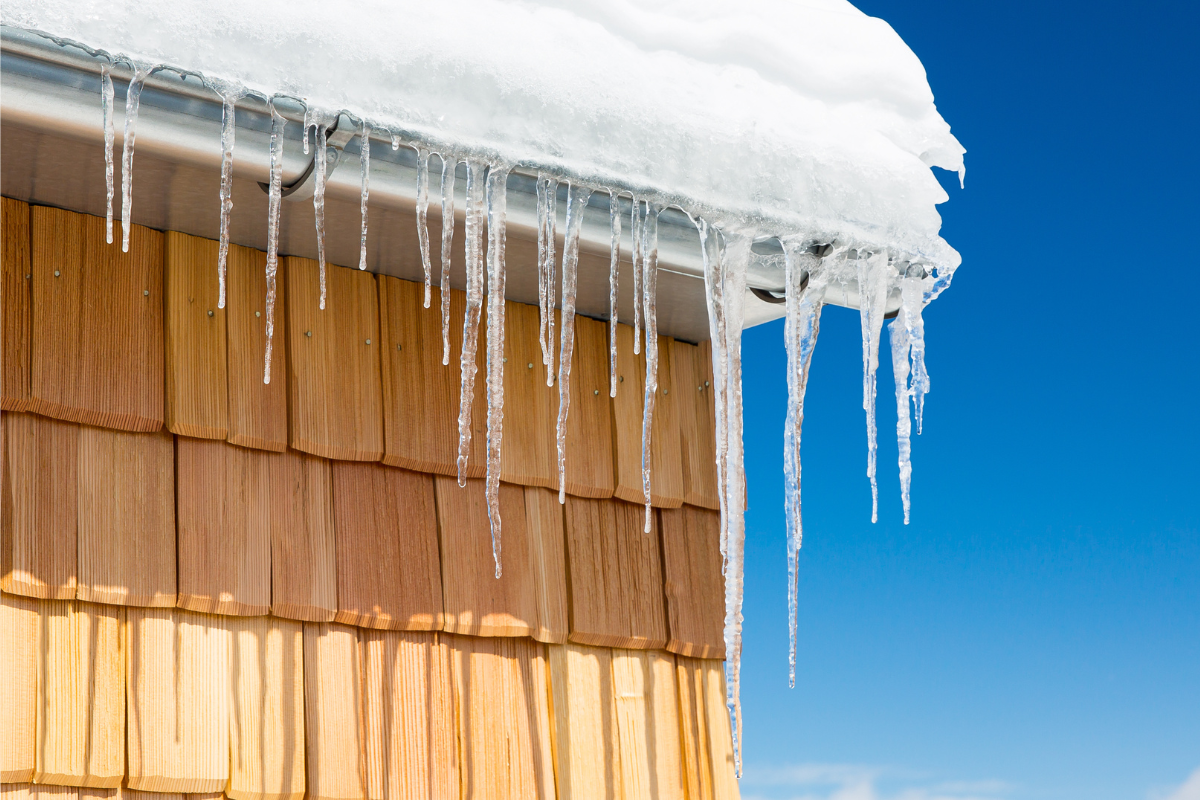
Ice dams 101
Keep the attic cold and the living space warm. Balanced soffit-to-ridge ventilation plus solid air-sealing keeps the roof deck from warming and kicking off the melt-refreeze cycle.
Exterior Checklist:
- Clean gutters; flush downspouts; add 4–6 ft extensions.
- Repair cracked/missing shingles; confirm drip edge is intact.
- Inspect chimney/vent/skylight flashings; re-seal where needed.
- Trim overhanging limbs to speed drying and reduce debris.
- Plan safe ground-level roof-raking after big storms (skip ladders).
Attic air-sealing, insulation & ventilation
Seal around can lights, bath fans, stacks, wires, and along top plates; weatherstrip/insulate the hatch. Add baffles at eaves to keep soffits clear; verify a continuous path to ridge/high vents. Top up thin insulation to current R-values. Vent bath fans outdoors—never into the attic.
Heat cables
Useful as a targeted band-aid on tricky eaves/valleys. Install on GFCI, route correctly, and turn on before storms—but pair with sealing/insulation for a real fix.
Snow management
After heavy snows, rake a couple of feet of snow off the lower edge to reduce meltwater at the eaves. Work from the ground with a non-marring rake in small passes.
Have Leo J Roth handle it!
We fix ice dams at the source with one coordinated plan: roof inspection and repairs, attic air-sealing and insulation upgrades, ventilation corrections, and (when needed) heat-cable installs—handled by a single local team. Our diagnostics (including infrared options) target the worst leaks so you spend where it matters. Schedule a fall roof & attic assessment now and keep ceilings dry all winter.
